Browse 110+ Media and Streaming Appliances on the NetActuate Media Marketplace
Explore


Browse 110+ Media and Streaming Appliances on the NetActuate Media Marketplace

By clicking "Accept all" you allow cookies that improve your experience on our site, help us analyze site performance and usage, and enable us to show relevant marketing content. You can manage cookie settings below. By clicking “Confirm selection” you agree with the current settings.

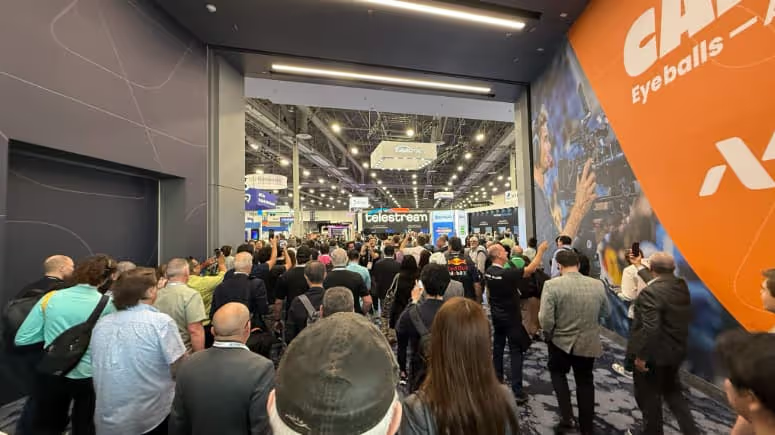
Our 2026 NAB began Saturday evening and ended Wednesday morning, five days of partner meetings, booth drive-bys, intensive C-band discussions, a recorded partner interview at the Synamedia booth, live AI demos across the NETINT floor, and more walks across Central Hall than my watch really wanted to count. This was my second NAB. I shared my first-timer perspective last year and wrote about IBC 2025 in September. This year's show is worth its own note, because the shape of the industry's conversation has shifted in multiple ways since 2025.
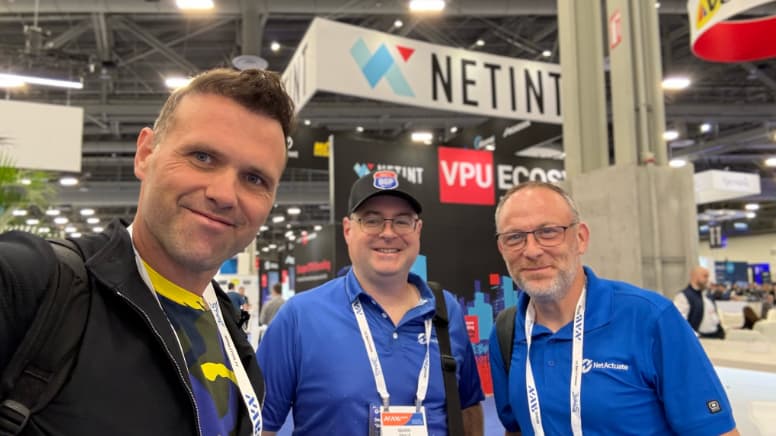
This year we sent three of us: myself, Mark Mahle, CEO; our VP of Business Development, Mark de Jong, and our Director of Technical Sales, Mark Price. Sandy Bhargavi, our CFO, was also there. The running joke with partners (started at the Bitmovin event Saturday, repeated roughly 40 times through the week) was that being named Mark is a hiring requirement at NetActuate. It is not, technically. But by Tuesday, when we walked into the NETINT booth, their team had extracted even more Marks from the ecosystem and everyone was openly counting. The "Tri Marks" identifier may stick.
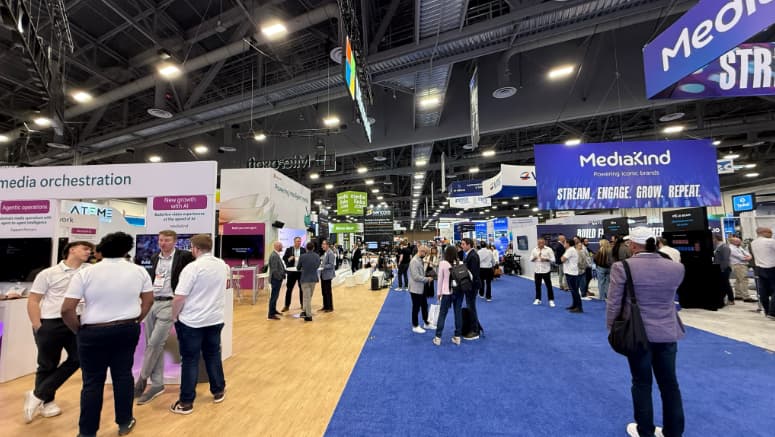
NAB wrapped Wednesday with 58,000+ registered attendees from 146 countries. 1,100+ exhibitors across the equivalent of nearly eight soccer fields. 132 first-time exhibitors. 48% of all attendees were first-timers. Content creator attendance was up 140% over 2025. Corporate media professionals hit 13,000+, nearly double last year. Two dedicated AI Pavilions. Over 530 conference sessions, about 900 speakers.
A lot of the people I spoke to said the show "felt smaller" this year. Registrations were actually up from 2025 (55,000 to 58,000), though they are still off the 2024 peak of 61,000. International attendance came down from 26% to 22%, and the country count slipped from 160 to 146. What I think people are actually feeling when they say it felt smaller is a composition shift: the show is expanding into creators, enterprise, and sports, and contracting relative to the core broadcast-vendor trade show it used to be. Different mix of faces. Different conversation tone. That shift is the story of NAB 2026, not the headline attendance number.
The show now runs alongside an FCC-driven C-band transition clock, a live MoQ deployment story, a VPU-versus-GPU debate that has real data behind it now, and a streaming economy that has matured into hard conversations about cost, cloud, and monetization. None of those are peripheral anymore.
NETINT: On April 16 we announced our partnership with NETINT Technologies to deliver global, on-demand VPU-accelerated video infrastructure across our network. Hardware-accelerated encoding and decoding on pre-installed VPU-enabled VMs in every major media market, starting at $0.237 per hour for a Quadra T1U, with custom builds available. We spent a lot of time at the NETINT booth through the week, met a whole slate of VPU ecosystem partners, and showed live AI-driven deployment workflows on a laptop. Read more about the NetActuate and NETINT partnership.
Synamedia. The longer-brewing opportunity. Our integration with Synamedia's Fluid EdgeCDN and Quortex Switch came into public view at NAB 2026 as a just-in-time, multi-CDN-orchestrated delivery model sitting on top of our 50+ POP anycast network. We recorded an interview with Robin Oakley at the booth on Monday afternoon, and connected in person with Ed Allfrey and Kenelm Deen during the week. Read more about the NetActuate and Synamedia partnership.
For both partnerships, NetActuate is at the global infrastructure layer, while our partners provide the specialized application layer on top. This is NetActuate’s “lane” in the space and is where we intend to stay.
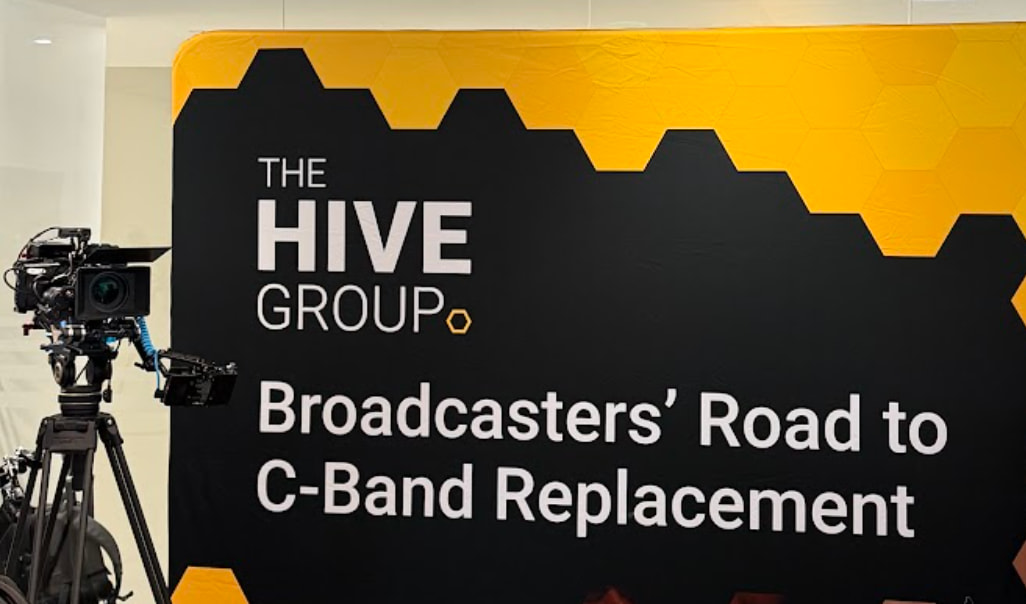
Tuesday morning started with Hive Group's The Future of Satellite Replacement, with ten speakers from CBS Paramount, Fox, Fox Sports, Disney, LTN, Synamedia, Zixi, Eluvio, AWS, and Globecast arguing out how the U.S. industry replaces C-band by the July 4, 2027 statutory deadline. There’s no silver bullet but hybrid architecture will clearly play a role. Last-mile diversity is where this gets won or lost. The timing is now.
Read my detailed feedback on the this session and learn about NetActuate's C-Band Transition Program here. The short version is that the satellite replacement is a hybrid of fiber, 5G, LEO, and Ku-band IP backhaul, and that a well-engineered anycast edge is a substrate each of the application-layer vendors can sit on top of. The window for affiliate mapping, vendor pressure-testing, and multi-scenario cost modeling is open right now. If you are working any piece of this, reach out.
Bitmovin opened our week Saturday with their partner event at the hotel. A sharp keynote from Warner Bros' Mark O'Connell on one-minute rips and the challenge of protecting DRM-gated content across multi-CDN estates, and Bitmovin's Partner of the Year awards for Akamai Cloud, Itochu, Viewlift, FX Digital, Google Cloud, and Think Analytics. Good lineup, sharp answers on AI, C2PA, MoQ, and codec strategy.

Norsk (live-streaming orchestration). Their input-process-output media pipeline with native SRT, WebRTC, and MoQ support keeps getting cleaner, and they are one of the sharper engineering teams out there.
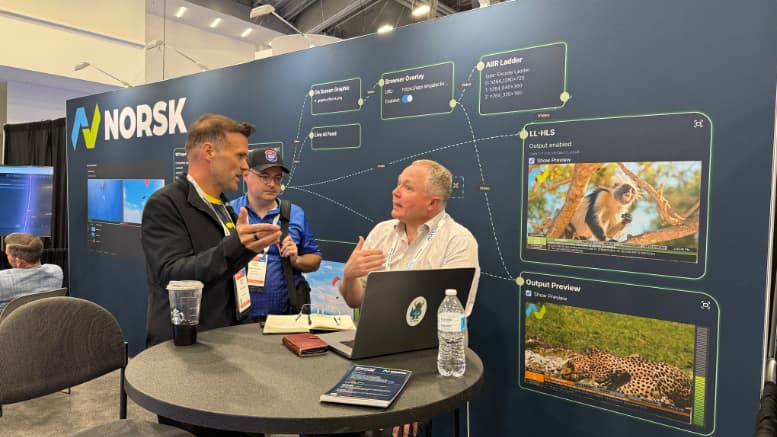
Persistent Systems (engineering services at scale). Publicly-listed Indian engineering services company, up from roughly 6,000 to 26,000 employees in six years. Deep work on data and AI across telco, media, and gaming customers.
ATEME (video compression and delivery). Long conversation on private CDN, sovereign cloud workloads, and cost-optimized media deployments for 24/7 broadcaster use cases.
Broadpeak (CDN and monetization). Building real-time piracy detection and token-abuse interdiction directly into the CDN, rather than handling it after the event. One of the more interesting anti-piracy architectures we’ve seen.

Layercake (media workflow automation, shown at the Grass Valley booth). Their Sheffield Shield cricket case study, auto-inserting 30-second ads between overs using sports-data triggers to turn a single-ad 8-hour stream into real revenue, represents a sharp operational win.
Dalet (media workflow platform). Talked through near-edge Kubernetes for media workflows and hybrid AI inference. Their ESPN hybrid-bursting architecture (85% predictable capacity on-prem, burst to cloud for peaks) is the pattern we are seeing repeated across the market.
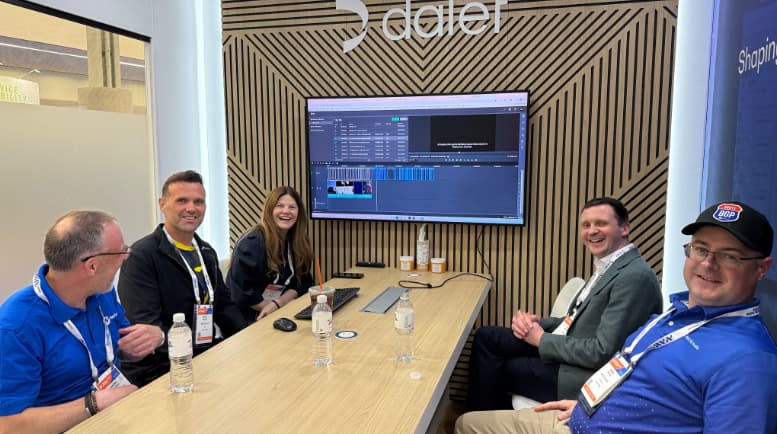
Velocix (hybrid cloud CDN). Good conversation on hybrid cloud economics and the real cost pressure facing steady 24/7 media workloads on hyperscaler infrastructure.
Ceeblue (real-time streaming). Their view on QUIC and Media-over-QUIC is forward-looking for the industry.
2you.io (edge computing and Kubernetes). Technically sharp conversation on edge compute patterns and network infrastructure under modern streaming workloads.
Ant Media (real-time streaming platform). Ran into Alper and the team in the hallway. Ant Media launched native MoQ support in Ant Media Server at the show, which puts them among the first streaming platforms with a shipping MoQ implementation. Their pragmatic "these protocols are complements, not competitors" framing on WebRTC vs MoQ is the right one.
A lot of other good meetings we will not list out here. Thank you to everyone who made time.
Media over QUIC. The most architecturally interesting conversation of the week was not about a new codec or a shinier CDN. It was about MoQ. The key insight everyone seemed to be landing on: this is not really media over QUIC, it is "objects over QUIC." The explicit object-addressable model changes what transport can do, and the use cases already extend well beyond media. Chinese EV companies are using MoQ for in-car IoT data. High-frequency trading is an obvious fit. Oracle ran a multi-vendor MoQ demo at the show with Ateme and others, using Oracle Video @ Edge as a MoQT relay fabric. Ant Media shipped MoQ support in their server. This concept has momentum.
AI is finally crossing from pitch to product. Every booth had an AI story. That part is tedious. What was different from 2025 is that several of those stories were concrete. Synamedia's AI by Quortex triggers inference only on meaningful stream changes, cutting live video understanding costs up to 10x. Layercake uses AI as a driver for genuinely surprising ROI on automated ad insertion in underserved sports content. CIRES21 and VisualOn published a rigorous codec-by-codec VMAF study at the show. And across the floor, the integration of AI into existing products (as opposed to separate AI-labeled product lines) is clearly how this is going to land.
VPUs have reached a tipping point. NETINT's 2026 State of Video Encoding Report pegs VPU adoption at 32%, with another 49% of respondents planning to evaluate in 2026. That gets VPU evaluation intent (51.5%) essentially at parity with GPU evaluation intent (53.6%). That has not happened in previous cycles. Anyone still treating hardware-accelerated video as a GPU-only story should take another look.
Piracy and edge watermarking. Mark O'Connell's Bitmovin keynote framed the “one-minute-rip problem” well, and by Wednesday you could walk from the Warner Bros talk to the Synamedia booth and see the answer (and the first to ship) in ContentArmor Edge Watermarking. Not every piece of the piracy problem is solved, but there are real, shipping products chipping away at it now. That is new.
Multi-CDN, private CDN, and sovereign cloud. Across Ateme, Broadpeak, Velocix, and Synamedia, a consistent theme becomes apparent: the hyperscaler-only CDN architecture does not work for 24/7 predictable workloads, and European sovereign cloud mandates are creating gaps that regional CDN capacity has to fill. Our joint story with Synamedia's Quortex Switch landed in a lot of those conversations. So did several private-CDN pitches we were not expecting to hear so openly this year.
Industry awards and recognition. Hydrolix won Best of Show for CDN Insights. NAB handed out its annual Product of the Year awards. Pro Video Coalition and RedShark ran their own Best in Show lists. Several of our partners earned recognition this week, and it was good to see them celebrated.
NAB 2026 was the first NAB where I felt the creator economy and the broadcast world treated each other as peers rather than tourists. The NAB's own numbers are telling: a 140% year-over-year jump in content creator attendees, and corporate media professionals essentially doubled. That shift changes which companies build what, which customers buy it, and where the infrastructure conversation goes next. For a global network operator with a media practice, this is the version of the industry we have been building for.
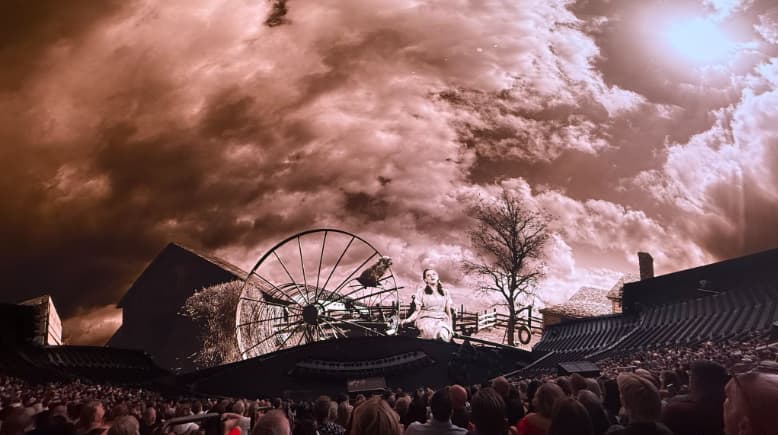
Some of the best conversations of the week happened away from the booths.
Saturday kicked off at the Wynn Lake of Dreams, where CaptionHub, Norsk, M2A Media, and Rise pulled together a sharp group of sports broadcasters, rights holders, and systems integrators for the week's unofficial opener. Strong group of sports infrastructure people to start a week that ended up very sports-media-heavy. Later that same evening, MonteVIDEO Tech Drinks at Park MGM rounded out the night.
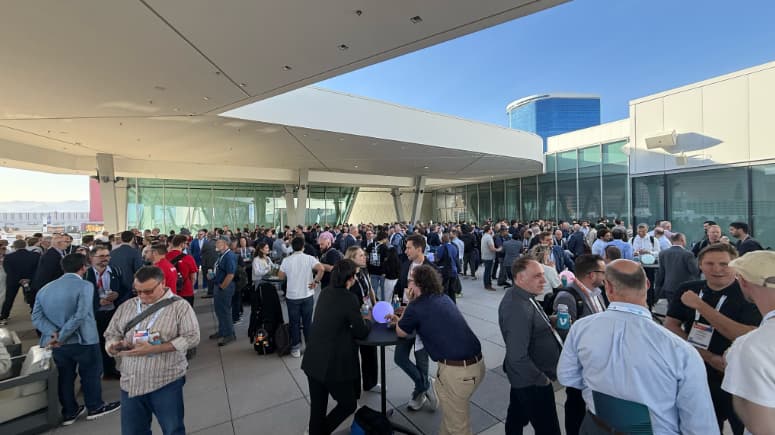
Monday's Streaming Summit Happy Hour on the West Hall Level 3 Terrace was the largest community gathering of the week, jointly sponsored by Brightcove, CDN77, Dolby, Fastly, Gcore, Google Cloud, Gracenote, Hydrolix, MediaKind, Netskrt, Nokia, Oracle, Qwilt, Synamedia, TwelveLabs, Uplynk, Vecima, Vimeo, Wowza, and a long list of others. Earlier that day, Dan Rayburn's opening remarks at the Streaming Summit set a sharp tone: a pointed critique of how AI-generated misinformation and vendor hype are eroding trust across streaming, and a reminder that accurate information, not technology, is the real currency of the business. That thread carried into the terrace conversations for the rest of the evening.
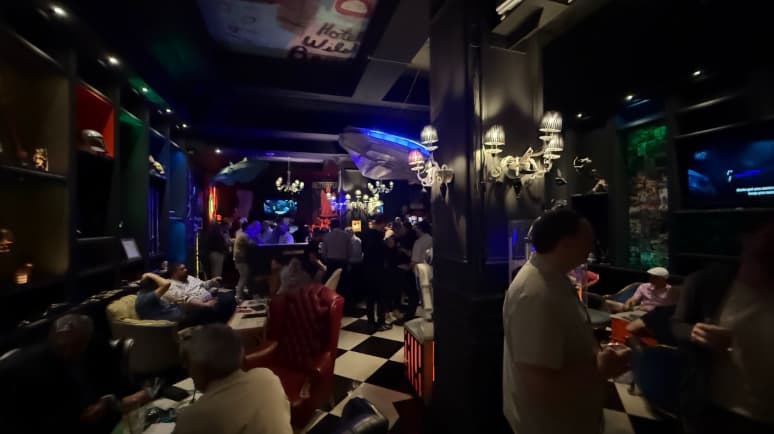
Tuesday night we stopped in at Demuxed at Millennium Fandom Bar, the video engineering community's annual escape off the strip. Tacos, drinks, cosplay-themed decor, and the kind of honest engineering conversations that do not happen on a trade show floor. For those watching, Demuxed 2026 returns to San Francisco October 16-17 after last year's London edition.
Also Tuesday, Backlight's gathering at Black Tap Craft Burgers, hosted jointly with AWS, MASV, and Suite, brought together a good cross-section of the production and media supply chain.
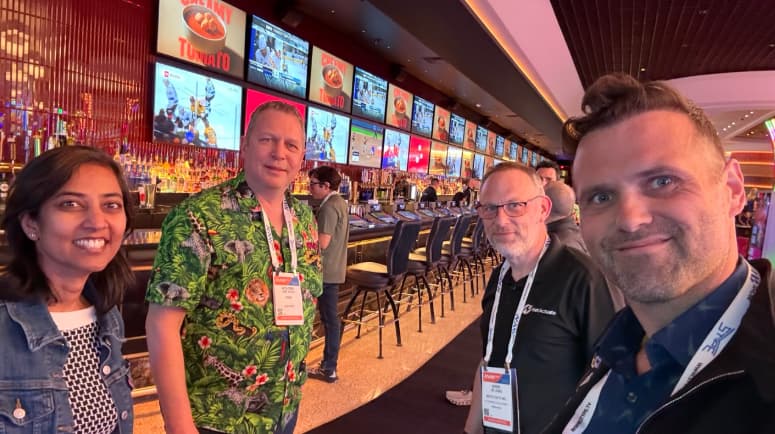
Wednesday's NAB Content Distribution Meetup hosted by DVEO was a great venue for substantive conversations. DVEO framed it well: "no panels, no presentations, just people working on the same problems from different angles." Platform, infrastructure, delivery, and monetization teams rarely end up in the same room. This time they did.
Also through the week: Bitmovin's Innovators Network (Saturday), Game On with Cisco, Splunk, and AWS at RedTail, NPAW at their booth, DPP and Signiant, Elecard's get-together, CDN77's Streaming Summit breakfast, OTTRed, GPL Technologies at Topgolf (Mark de Jong was waving the flag for NetActuate), Harmonic and deltatre, and Yospace. Thanks to all the hosts.
The off-floor circuit certainly helps to build relationships and NAB 2026 had offered a nice variety of options.
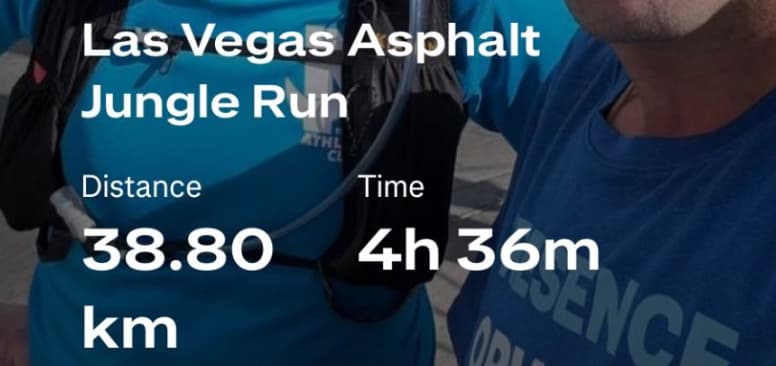
A quick word on the other tradition of the week. Mark de Jong put in almost a full marathon on the Strip on the first day out, and kept running for several days after that. I made it out for a 5K with him on day one, which was more than enough to confirm he is operating on a completely different level. If you were also running mornings this week, thanks for the company.
We are looking forward to doing it again at IBC 2026 in Amsterdam in September. If you want to join the IBC run club, reach out before the show and pack your shoes. The Amstel canals make for a far better running route than the Vegas Strip, and there is always room for more.
Our calendar is already booking up for IBC 2026 in Amsterdam, September 11-14. By then we expect to have more to share on the joint Synamedia story, on the expansion of our NETINT VPU footprint, on the new partner relationships coming out of this show, and on a few other things still under wraps.
Thank you to the partners, customers, and friends who made time for us in Vegas. Big thanks to Mark de Jong and Mark Price for making the entire five-day run feel coordinated. And to Sandy for keeping us on schedule and on budget, which is no small feat when the West Hall to Central Hall walk is twenty minutes each way.
If you want to pick up any of these threads, you can reach me, Mark de Jong, and Mark Price through netactuate.com.
See you in Amsterdam.
Mark Mahle, CEO & Founder, NetActuate


.png)
.png)







.jpg)
