Browse 110+ Media and Streaming Appliances on the NetActuate Media Marketplace
Explore


Browse 110+ Media and Streaming Appliances on the NetActuate Media Marketplace

By clicking "Accept all" you allow cookies that improve your experience on our site, help us analyze site performance and usage, and enable us to show relevant marketing content. You can manage cookie settings below. By clicking “Confirm selection” you agree with the current settings.

NANOG 97 brought the operator community back together in Bellevue, WA, for several days of talks, meetings, hallway conversations, and the kind of practical reminders that tend to follow you home. With an impressive 179 first-time attendees and people from 30 countries, there was no shortage of people to introduce myself to.
As usual, the best parts of NANOG were not limited to the formal agenda. The talks mattered, but so did the conversations between sessions, the committee work, and the moments where someone said something that made me rethink an operational habit I had taken for granted.
Sunday started with the Women in Tech mixer. NANOG 97 had 118 women in attendance overall, and roughly 65 of us attended the mixer. It was a great event, with a completely different feel from the rest of NANOG, and it made the start of the week feel more personal before the larger agenda took over.
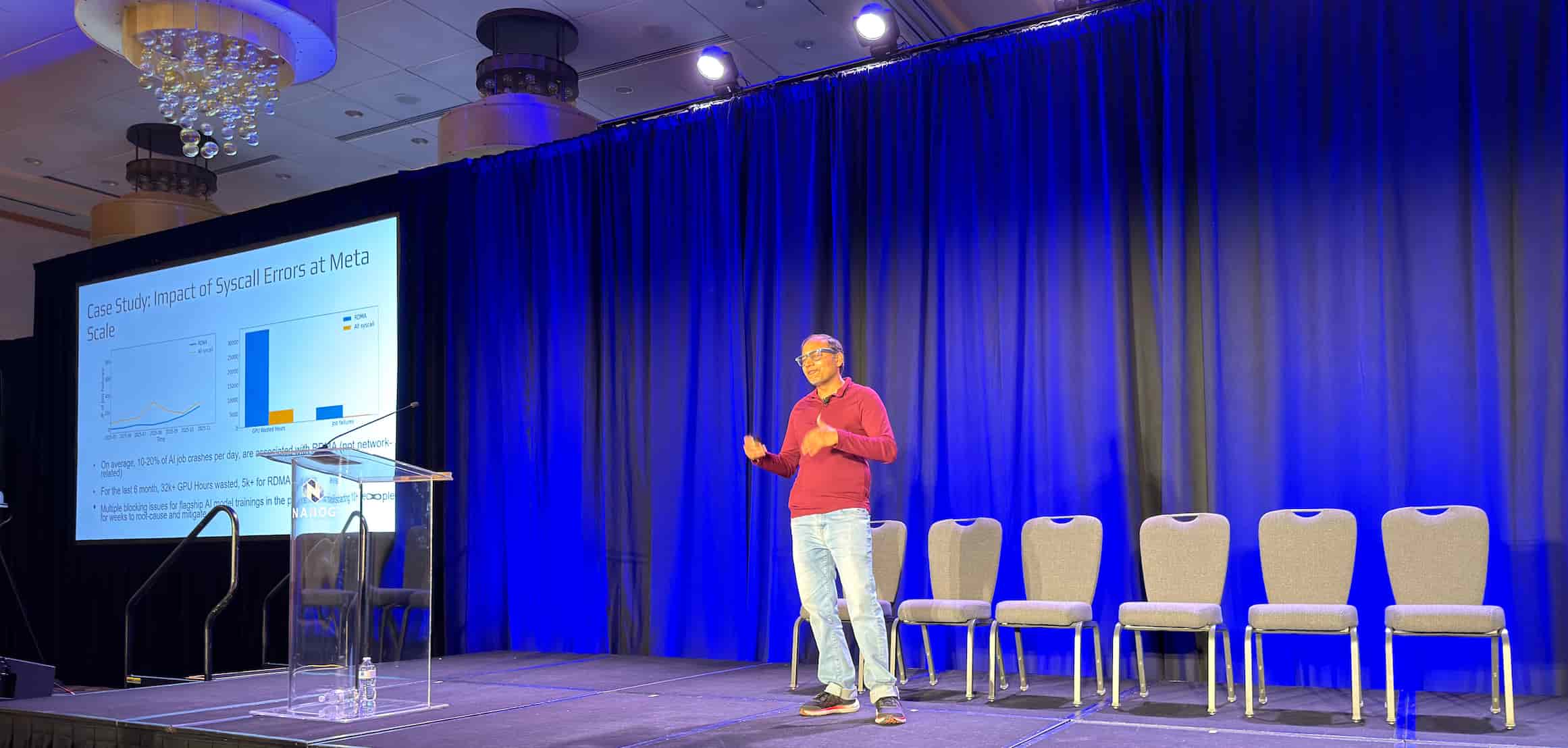
Monday's keynote, “The SRE of AI: Engineering Network Reliability for the Tokenized Era” from Dave Schaeffer of Cogent Communications, ended up being one of the more interesting hallway-track stories of the week.
The technical talk that stayed with me most from Monday was Brett Lykins' “The Hidden Costs of SSH at Scale.” SSH is so familiar in network operations that it is easy to treat it as neutral plumbing, but the talk was a useful reminder that protocol round trips are not free. At local latency, nobody really notices. Across higher-latency paths, and especially when automation fans out across many devices, that cost starts to show up.
The takeaway for me was not that operators should replace SSH everywhere. Most networks do not get that luxury. It was more that access architecture matters, especially when familiar shell-based tooling hides round trips behind prompt detection and session setup. When the measurements say latency is the bottleneck, keeping access paths closer to the devices, or thinking about decentralized local systems access, can make a real difference.
What always grabs my attention is when the community comes in with one expectation around an upcoming talk, and leaves with a different one. That happened at least once and that shift is always worth paying attention to.
Monday evening also had a sponsor-run social at Salty's in Seattle, right on the water. It was a good setting for the kind of conversation that makes NANOG valuable, and the seafood did not hurt.

The Tuesday talk I keep coming back to was Du'An Lightfoot's “From CLI to AI: A Network Engineer's Guide to Building Useful Agents.” What I appreciated was that it did not treat AI agents as magic. It treated them like operational systems with blast radius, observability needs, tool access, approval gates, and failure modes.
That is the framing I want more of in network automation conversations. Not every workflow needs an agent; deterministic automation is still the right answer when the data and process are structured. When agents do make sense, the question is not whether they can do something once in a demo, but whether they can be scoped, measured, audited, and kept from doing the wrong thing at production scale.
Tuesday also included the NANOG Members Meeting, which is always a useful pulse check on the organization and where the community is headed. One item that stood out was the mention of planning work around NANOG 100 in San Francisco, with encouragement for people to nominate themselves and help make it as strong as possible.
I hope people do. NANOG works best when the people who care about the community step forward and help shape it. Program content, member experience, social events, newcomers, hallway track, all of it improves when more people are willing to put their names in.
Tuesday evening brought Beer N Gear, including a hunt run by the Community Engagement Committee that gave attendees a reason to visit vendors and enter a raffle for gift cards. It was a simple format, but a useful one. Vendor events are better when they create natural reasons for people to talk, especially for newer attendees who may not already know who to approach. As a small future improvement, I would love to see more 0% ABV options for non-drinkers alongside the mocktails.
Wednesday's headline talk for me was Geoff Huston's “50 Years of Networking.” The slides walked through what made Ethernet and IP so successful: they were fast, good enough, cheap, open, simple to build, and largely able to operate themselves. That combination kept the middle of the network simple and pushed complexity out toward the edge, which helped the Internet scale in ways that still shape our daily work.
The part that made me pause was the warning about where we may be headed next. Huston raised concerns that if silicon cost-performance stops improving, the pendulum can swing back toward centralized shared infrastructure, incumbent advantage, and closed systems. His transcript and slides framed this around expensive technology, specialized shared resources, less openness, and economic value moving back toward centrality.
It was also an interesting contrast to Monday's AI keynote. Monday put AI-era reliability in front of the room; Geoff's talk made me think about the infrastructure shape underneath that demand, especially if specialized compute “pulls” value and leverage back toward central platforms.
That made me think about whether we are approaching a moment where some critical parts of the Internet ecosystem drift back toward something that feels closer to the AT&T or Ma Bell era than the open, cheap, edge-heavy model many of us build around. Not because history repeats exactly, but because centralization changes who has leverage. The Q&A added useful nuance: the network protocols may remain open, but the economic center of gravity can still move toward closed, centralized service platforms.
It is not a settled forecast, and I would not treat it as one. But it is the kind of concern operators should keep in mind while everyone is racing to build larger specialized AI and compute platforms. Open systems do not stay open by accident.
Wednesday also had a good lunch-on-your-own break, and it left room for the practical follow-up conversations that make NANOG useful after the talks end.
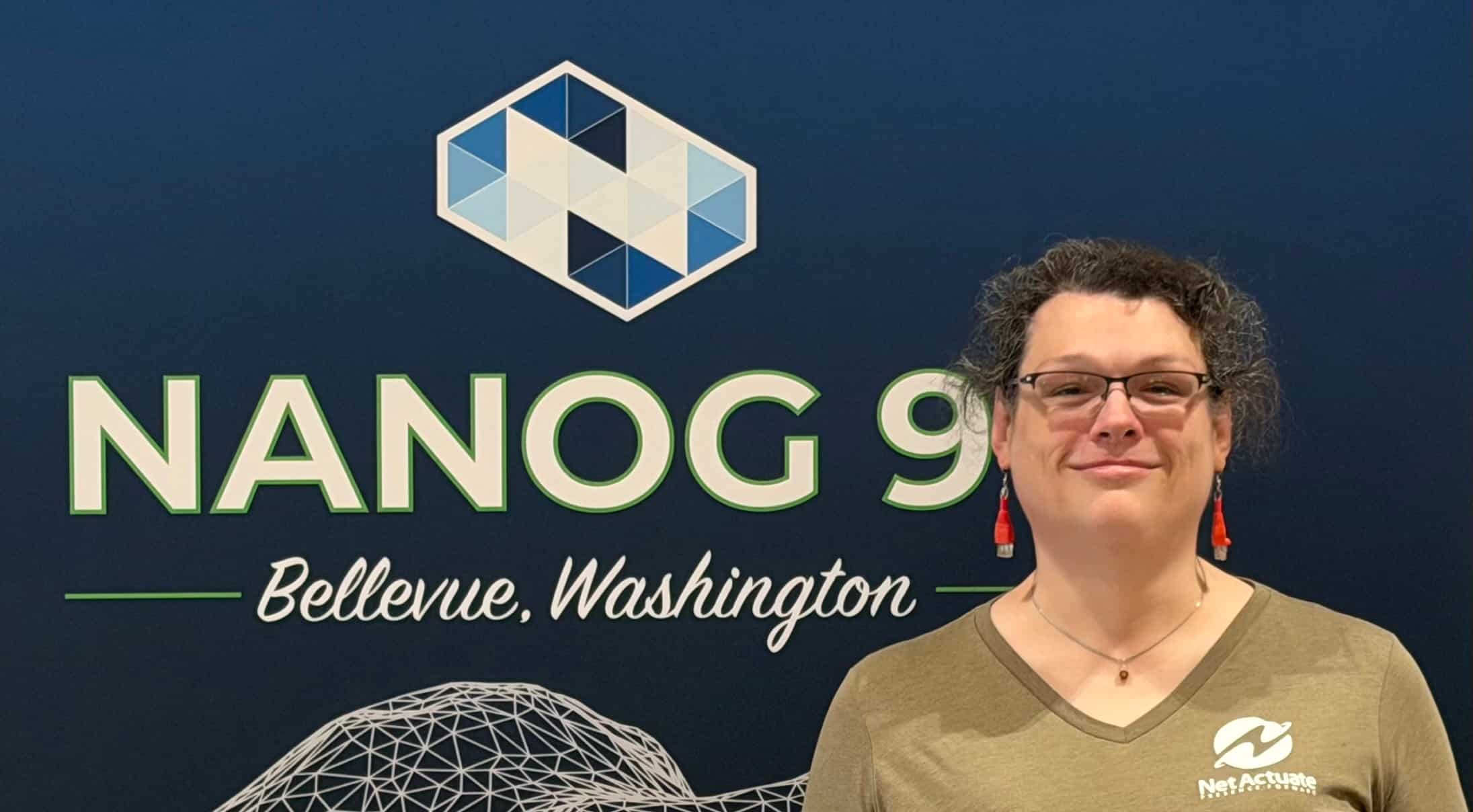
Overall, NANOG 97 was a useful mix of community, operational detail, and forward-looking concern. The talks that stuck with me were not just about new technology. They were about the costs and trade-offs hidden inside familiar systems: SSH round trips, access architecture, AI agent guardrails, centralization, and the tension between open infrastructure and closed service delivery.
The community side mattered too. Between the Women in Tech mixer, first-time attendees, Beer N Gear, sponsor socials, committee work, and hallway conversations, NANOG continues to be more than a set of talks. It is one of the places where operators compare notes, test assumptions, and decide what work needs attention next.
I left Bellevue with a few practical things to follow up on, a few talks I want to revisit, and a strong reminder that NANOG 100 is coming quickly. If you care about where this community is headed, this is a good time to get involved, nominate yourself, and help make that milestone event something worth remembering.

.png)
.png)





.jpg)