Browse 110+ Media and Streaming Appliances on the NetActuate Media Marketplace
Explore


Browse 110+ Media and Streaming Appliances on the NetActuate Media Marketplace

By clicking "Accept all" you allow cookies that improve your experience on our site, help us analyze site performance and usage, and enable us to show relevant marketing content. You can manage cookie settings below. By clicking “Confirm selection” you agree with the current settings.

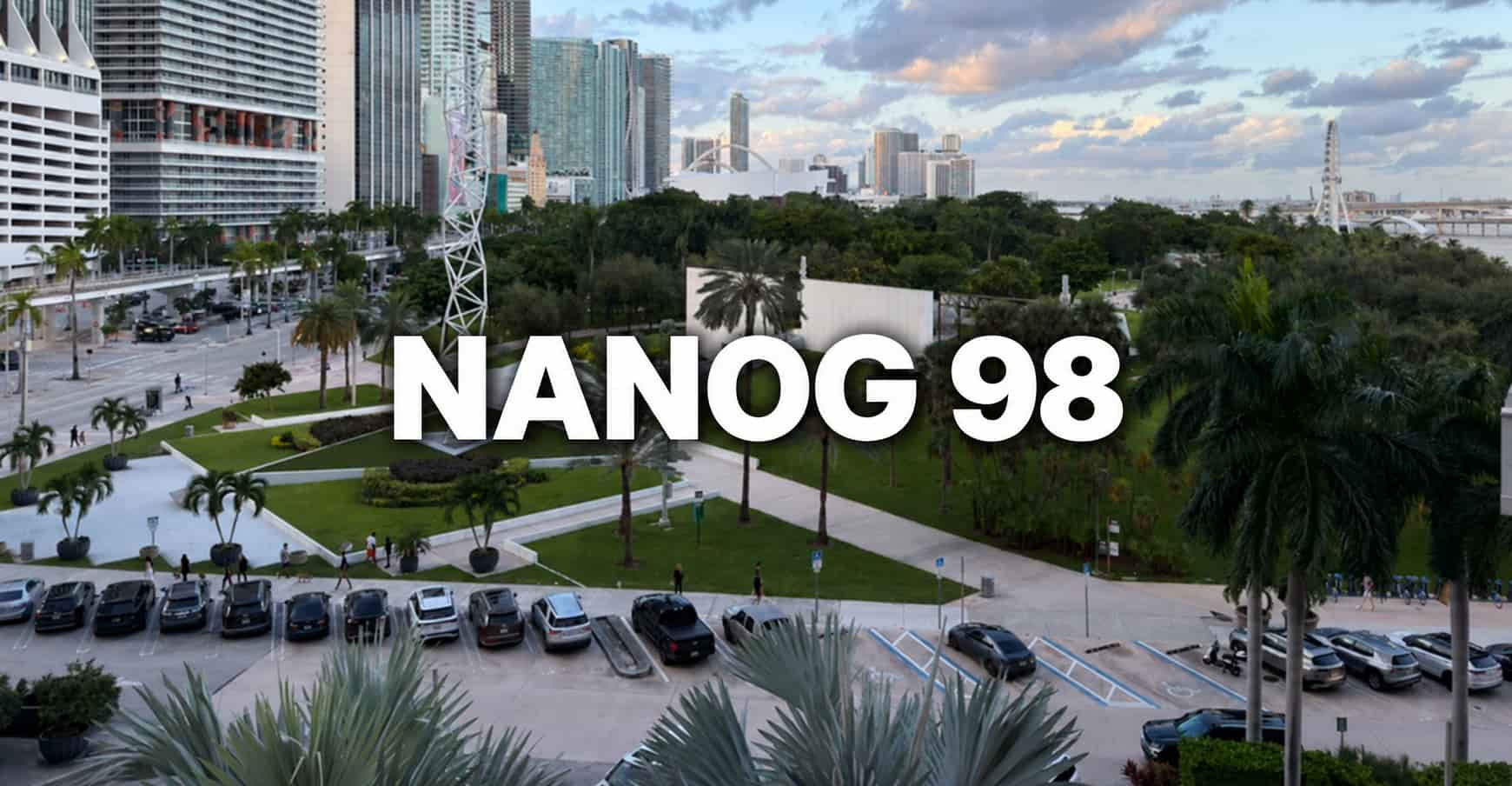
I came away from NANOG 98 in Miami with plenty to think about, particularly around validating network changes and using AI in everyday operations. It was also another opportunity to work on my stage presence, something that has become a meaningful part of my involvement with NANOG.
Before the conference

I arrived on Saturday and went to dinner with other operators. It was great to catch up before everybody’s schedules filled up with meetings and sessions. Afterwards, we walked down historic Ocean Drive.
Sunday started early alongside other early arrivals, including a trip to Dolphin Mall for some weather-appropriate gear. Later, I attended the Sunday social and caught up with people from across networking, cloud, AI, and datacenters.
Monday
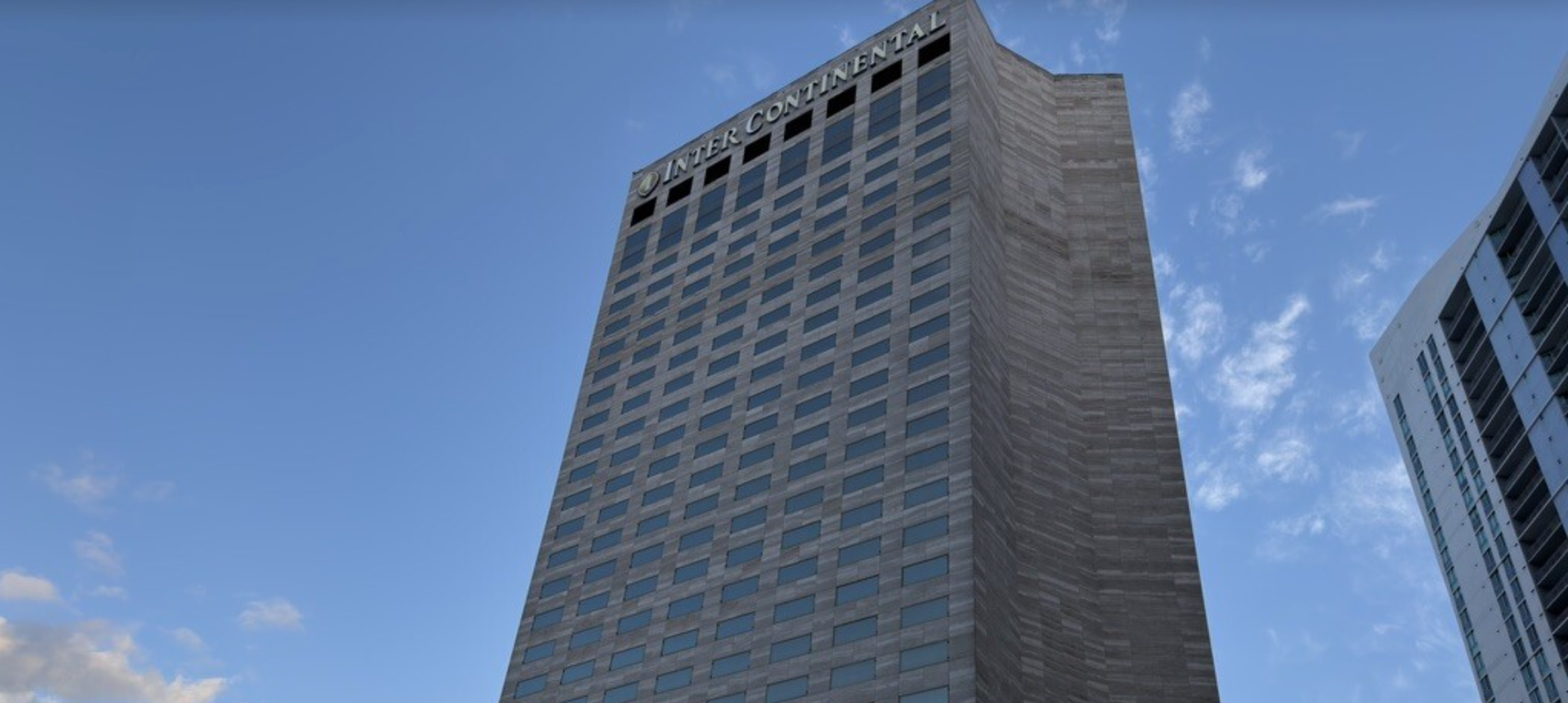
Monday morning was filled with 1:1 meetings. In the afternoon, I took over moderation of the main stage for every talk through the final presentation.
Taking on more speaking roles at conferences is helping me grow personally and professionally. Contributing to the program in this way has become a regular part of NANOG.
One of the afternoon’s presentations was Brad Tarno’s “Your Change Deserves a Dress Rehearsal: Digital Twins from Production State with Containerlab and OTG.” Brad described building disposable labs from production configurations, topology, and routing state, then testing how a proposed change affects traffic.
That connects with a familiar operational problem: a configuration can look correct while the routes passing through it behave differently from what you expected. An RPKI Invalid route might appear acceptable under one part of a policy, then be correctly rejected further along the policy chain. If the lab lacks the validation state present in production, the same configuration may produce a different result.
This is why the detail behind the test matters. Brad also discussed the limitations of virtual labs, including hardware-specific behavior they cannot faithfully reproduce. Knowing which parts of a change were tested, and which remain inconclusive, is useful information when deciding whether to proceed.
After the sessions, I attended the CoreSite-sponsored social at Puttshack. My first conversation focused on the network-critical applications that have underpinned internet infrastructure for decades. We discussed the vulnerabilities that may still be hiding in familiar, widely deployed code, and what faster AI-assisted vulnerability discovery could mean for the networks that depend on it. The PHP vulnerabilities disclosed later that week reinforce the point: mature, widely used software can still carry serious security risks.
Later in the evening, I changed tables and joined a discussion about AI agents in the NOC. We talked about troubleshooting, integrating agents into existing workflows, and helping engineers provide better customer responses. It was a topic that would come up again before the week was over.
Tuesday
Tuesday brought another round of vendor meetings. Having the time to sit down together and talk through requirements is a useful part of these events, especially when the people involved are usually spread across different locations.
I was unable to attend Tuesday’s social event, but joined nine other NANOG attendees for dinner. It was a quiet evening, with plenty of time to discuss the conference and compare notes on the talks from the first two days.
Wednesday
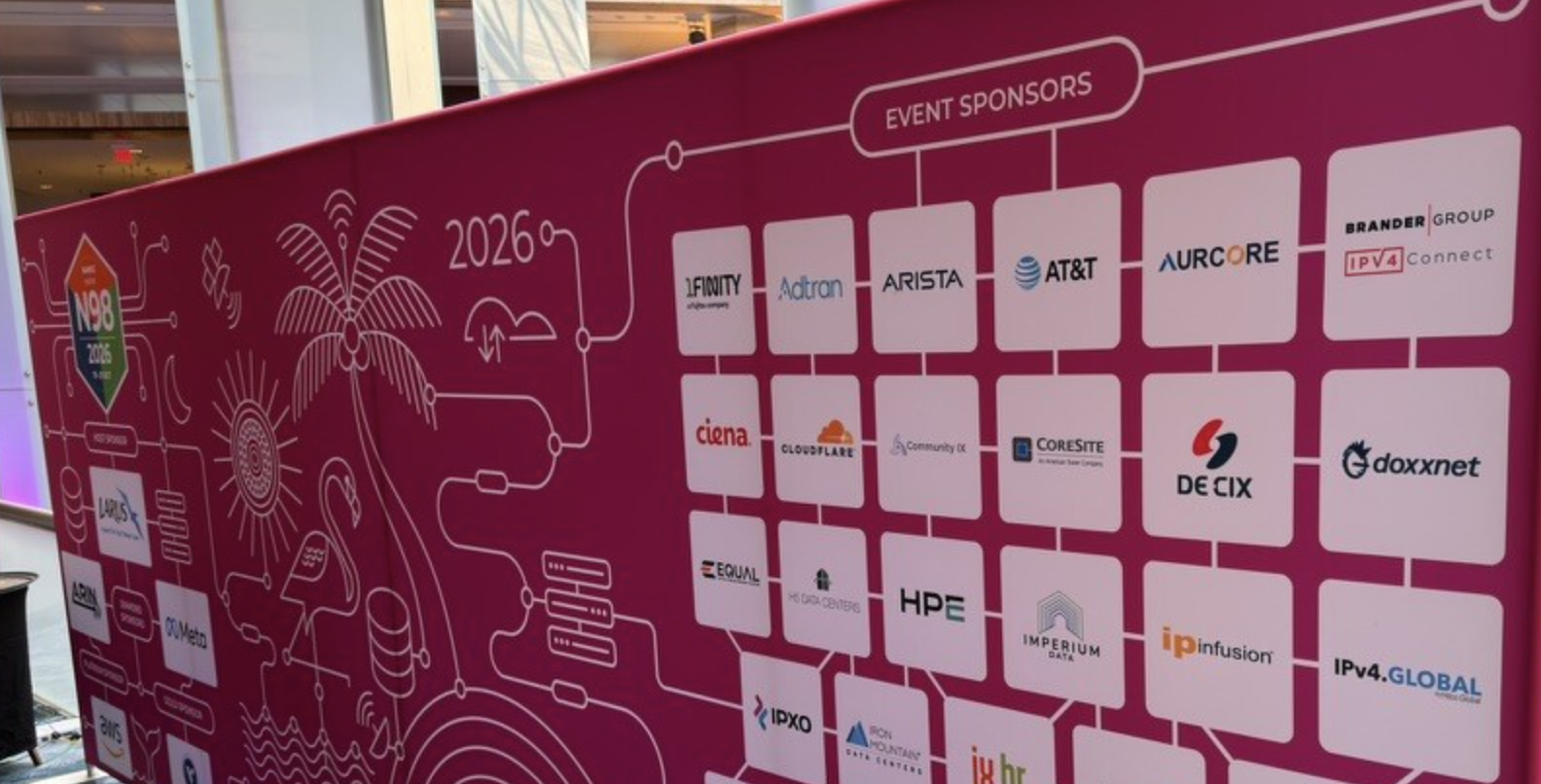
Wednesday followed a similar pattern of meetings, with a GPF lunch at Hell’s Kitchen breaking up the day. About 50 peers attended, and I appreciated the chance to meet some new people alongside the familiar faces.
Bryan Fields’ lightning talk, “Provisioning Your Network with AI, An introduction,” returned to the subject we had discussed at Monday’s social. He talked about using clear specifications and documentation to help AI build repeatable network tooling. In one troubleshooting example, AI helped assemble evidence and documentation that he could use to work through an issue with support.
That is a use of AI I can relate to. We already use it to help collect evidence, interpret findings, and assist with customer responses. Providing sources is part of that process, so the NOC can independently verify the findings.
I particularly value its help in pulling together a broader view of an issue. It can investigate several possible causes and organize the evidence for an engineer to review. Helping turn that investigation into a clear, consistent customer response is valuable as well. Bryan’s examples gave us a practical way to discuss how these tools can fit into the work operators already do.
The day ended with another dinner alongside NANOG attendees before I left early on Thursday.
Looking ahead
One of my takeaways from NANOG 98 is that, regardless of how you feel about AI, it is going to affect your day-to-day work. That may mean responding to new CVEs found through AI-assisted research, reviewing network tooling built with its help, or using agents to investigate problems and prepare clearer customer responses. I want to keep exploring how it fits into our existing automation, with the same attention to evidence, verification, and change control that we bring to other operational tools.
NANOG 98 gave me technical ideas to follow up on, time with peers, and another chance to push myself on stage. I’m looking forward to building on all three.