Browse 110+ Media and Streaming Appliances on the NetActuate Media Marketplace
Explore


Browse 110+ Media and Streaming Appliances on the NetActuate Media Marketplace

By clicking "Accept all" you allow cookies that improve your experience on our site, help us analyze site performance and usage, and enable us to show relevant marketing content. You can manage cookie settings below. By clicking “Confirm selection” you agree with the current settings.

For years, the default infrastructure strategy was simple: move fast in the hyperscalers, optimize later.
That approach worked — until cost, control, and continuity became board-level issues.
Today, enterprises are asking tougher questions. How do we control cloud spend without sacrificing agility? How do we preserve architectural flexibility without slowing product teams down? And how do we build resilience into infrastructure before the outage, not after it?
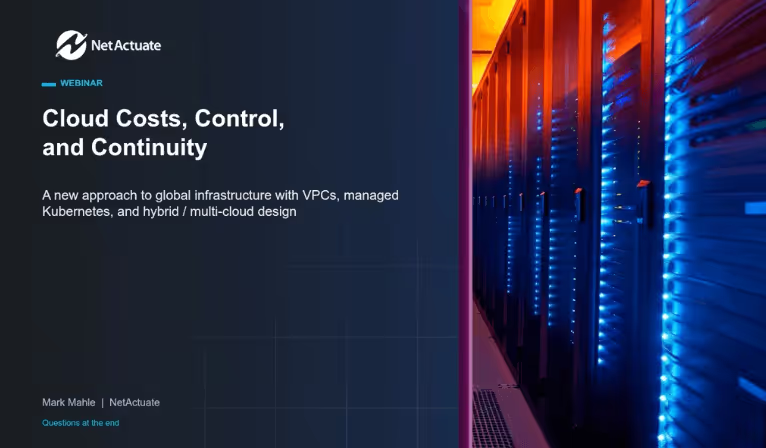
That is the focus of my on-demand webinar: Cloud Costs, Control, and Continuity.
This is not an anti-cloud message. It is a more mature one. The point is not to abandon the cloud. It is to stop treating cloud-first as the automatic answer for every workload.
The central idea is straightforward: the future is not anti-cloud — it is post-default.
In the session, I lay out a practical framework for modern infrastructure strategy built around three constraints: cost, control, and continuity. Those are now the forces shaping real-world decisions far more than brand preference or legacy assumptions.
Cost is no longer just a monthly bill. It is unit economics, egress, utilization, and the hidden premium of convenience. Control is not just security. It is portability, governance, private boundaries, and the ability to change topology or providers without rewriting your environment. Continuity is not a backup plan sitting on a shelf. It is a live architecture decision involving failover design, routing, replication, and operator readiness.
The takeaway for executives is clear: the best infrastructure model is not the cheapest in isolation or the simplest on paper. It is the one that balances all three over time.
The webinar also challenges a common assumption that every workload belongs in the same place. It does not. Some workloads still belong in the public cloud. Others are better suited to regional infrastructure, managed Kubernetes, hybrid environments, or more controlled private boundaries. The right strategy is not one platform. It is a placement model that reflects what each workload is actually doing to the business.
That is where the conversation becomes more strategic.
A VPC is no longer just a networking construct. It is a control boundary. Kubernetes is no longer just a cluster decision. It is a platform choice. Hybrid is no longer a compromise. Done correctly, it is design discipline.
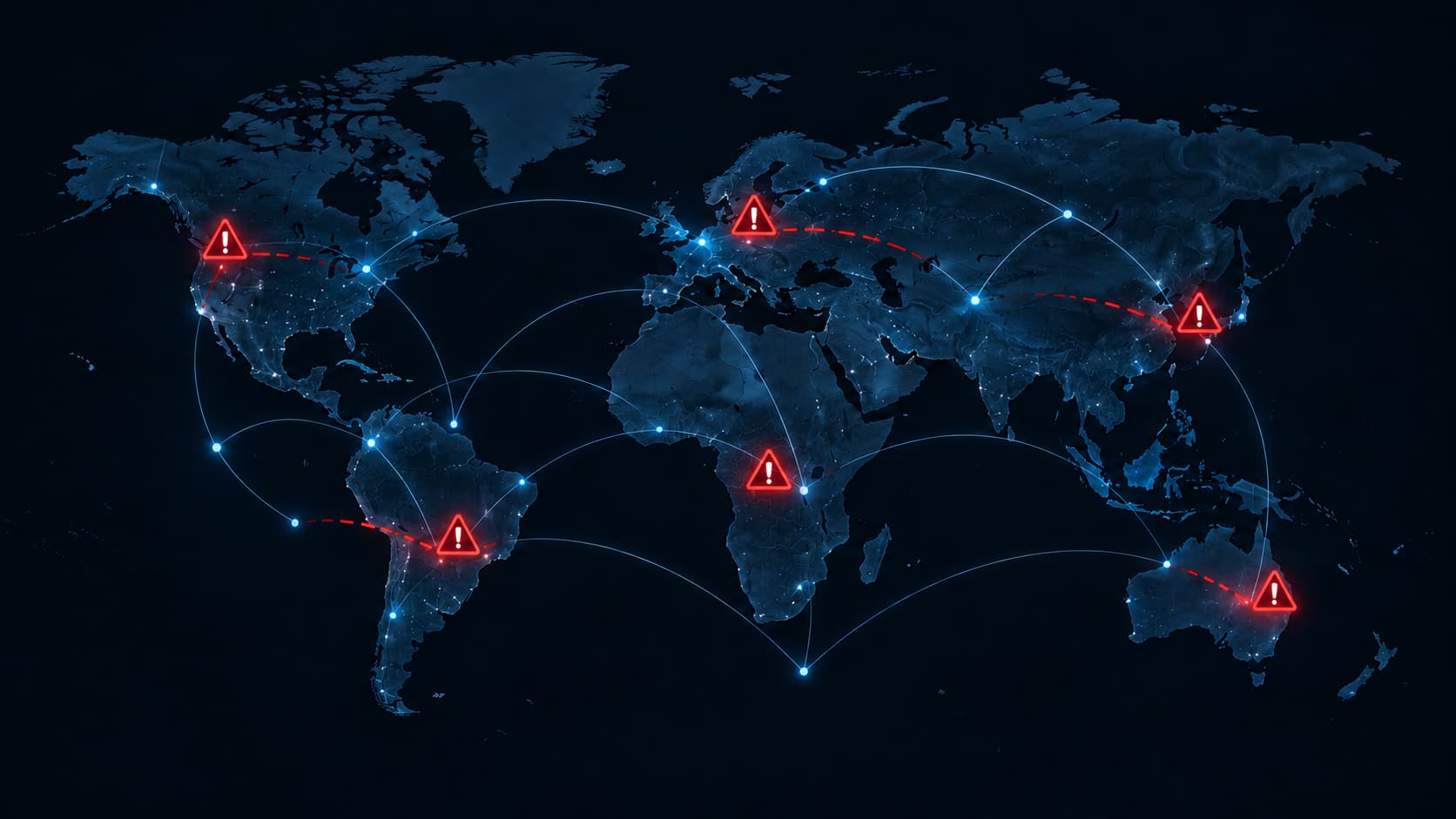
One of the strongest themes in the webinar is that continuity must be treated as a property of the architecture itself. If a region fails, traffic shifts, data moves, or operators are under pressure, the business needs more than a document. It needs a continuity model that is real, tested, and operationally sound.
I also connect this shift to NetActuate’s Open Network Edge approach: a more open, standards-based operating model that gives customers greater flexibility across cloud, Kubernetes, VMs, colo, bare metal, storage, and private interconnect. In a market where lock-in carries real cost, that architectural choice matters.
For leaders evaluating infrastructure through the lens of growth, efficiency, and resilience, this webinar offers a clearer way to think about what comes after cloud-first.
Viewers will walk away with a practical lens for evaluating:
This is the infrastructure conversation executive teams should be having now.
Watch the webinar on demand here.

.png)
.png)






.jpg)